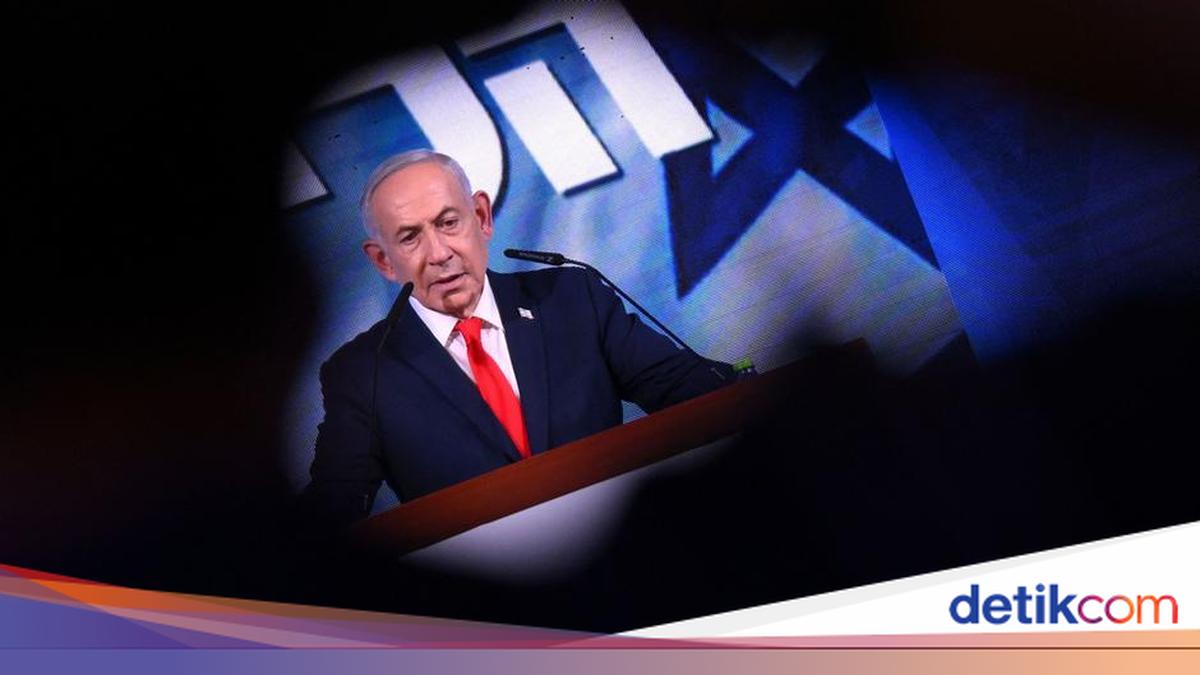
Israel's parliamentary election has produced no clear winner, with Prime Minister Benjamin Netanyahu's camp falling short of a majority despite finishing ahead, according to detikNews. Neither Netanyahu nor his main challenger, Gadi Eisenkot, appears positioned to command a majority of seats in the Knesset. The country now confronts a political impasse, and detikNews, citing BBC reporting, has laid out four possible scenarios for what comes next.
Why it matters
The result leaves the incumbent prime minister unable to claim a return to power on his own terms, even though his bloc outperformed expectations. Israel's next government — or the absence of one — will shape policy on security, the occupied West Bank and Gaza, and the role of the country's Arab parties in national politics. Each of the four scenarios carries heavy costs, and none is guaranteed to produce a stable coalition.
Scenario one: a national unity government
The first path depends on Netanyahu persuading Eisenkot to join him in a national unity administration. That would require Eisenkot to abandon the central premise of his campaign. He built his bid around presenting himself as the only alternative to Netanyahu, with the explicit goal of removing him from office.
On election night, Eisenkot told supporters at his campaign headquarters that Netanyahu should announce his departure from political life that day, saying Israelis had grown tired of what he described as a culture of lies, division and incitement. Those remarks came before an exit poll that had initially pointed to an Eisenkot bloc advantage was revised to show Netanyahu's side pulling ahead.
Netanyahu could try to bring Eisenkot's Yashar party into a unity government with his Likud party, shedding the far-right and ultra-Orthodox partners that make up his current coalition. At Likud headquarters, however, he thanked what he called his loyal partners and called for a strong right-wing government — a statement some read as a signal that he intends to keep those alliances intact.
One factor that could make unity more likely is a fresh conflict with Iran, which could pressure party leaders to set aside political differences. Days before the vote, Israeli and US media reported that Netanyahu had pushed for a new strike on Iran and had asked Donald Trump to approve US involvement. Critics of Netanyahu would see such a move as an attempt to rescue his own career by triggering another regional conflict.
Scenario two: an opposition government resting on Arab parties
This option would mark a dramatic shift in Israeli politics. Only once has an independent Arab party formally sat in a coalition — in 2021 — and that arrangement did not last. Eisenkot and all but one of the Jewish parties in his bloc have said they will not join a government alongside the Arab parties. For now, that is the opposition's only route to a majority.
The Arab parties were a focal point on election night. They appeared to outperform expectations and could reach a record 19 seats, driven by unprecedented turnout among Israel's Arab population, which makes up roughly a fifth of the country and many of whom describe themselves as Palestinian citizens of Israel. For years, many in that community boycotted Israeli elections, arguing that voting legitimized a system they say treats them as second-class citizens. This time, the pull of ousting the most right-wing coalition in Israel's history drove them to the polls.
The United Arab List, projected at eight seats, has said it is willing to join an opposition government, while The Joint List, projected at 11, has said it would offer support from outside. The only Jewish leader currently backing this arrangement is Yair Golan of The Democrats. Such a coalition would be highly fragile, particularly over issues such as Gaza and the occupied West Bank. The solid front of Jewish parties refusing Arab participation illustrates how deep the divisions in Israel run.
Scenario three: peeling away right-wing parties
Could Netanyahu persuade right-wing parties inside Eisenkot's bloc to break away and join his coalition? The two most likely candidates are Naftali Bennett, co-leader of the Beyachad political alliance, and Avigdor Lieberman, leader of Yisrael Beiteinu. Both are hardline figures on security who share political ground with Netanyahu.
Yet both campaigned openly to remove him and to expand military conscription for the ultra-Orthodox — a step that puts them in direct conflict with the two ultra-Orthodox parties that have been part of Netanyahu's government. That makes a jump to his side hard to picture. Some argue Bennett's and Lieberman's parties could replace the ultra-Orthodox parties, but current seat projections suggest such a coalition might not have enough seats to reach a majority.
Scenario four: another election
If none of the above can be agreed, the fallback is a new election. Many would see that as a concealed win for Netanyahu, who would remain prime minister in a caretaker capacity until a new vote is held, and who may believe he has a better chance of winning next time. Some analysts point to turnout levels as a factor in how a repeat contest might unfold.
What to watch: whether Netanyahu opens talks with Eisenkot's camp, whether the Arab parties' projected gains hold once final results are certified, and whether any right-wing defections materialize. If none of these paths closes, Israelis could be heading back to the polls.